
779 responses to Woking's Local Plan consultation: 81% back the vision, but more rejected the land-use priorities than backed them. Green Belt was the top worry.
Woking residents broadly like the council’s vision for the borough in 2044. They are far less sure about how it plans to use its land.
The council has published the results of its summer consultation on what the new Local Plan should cover. It drew 779 responses. The plan will decide where homes, jobs and infrastructure go between 2027 and 2044 (council announcement, 2 October).
Respondents were asked whether the council had picked the right priorities under seven themes. Six won clear backing. Land use did not:
- 41% agreed the land-use priorities were right
- 46% disagreed
- 13% did not know
That is the only theme where more people said no than yes. The figures are in a report the council’s Executive will note on Thursday 8 October (Executive report EXE26-116).
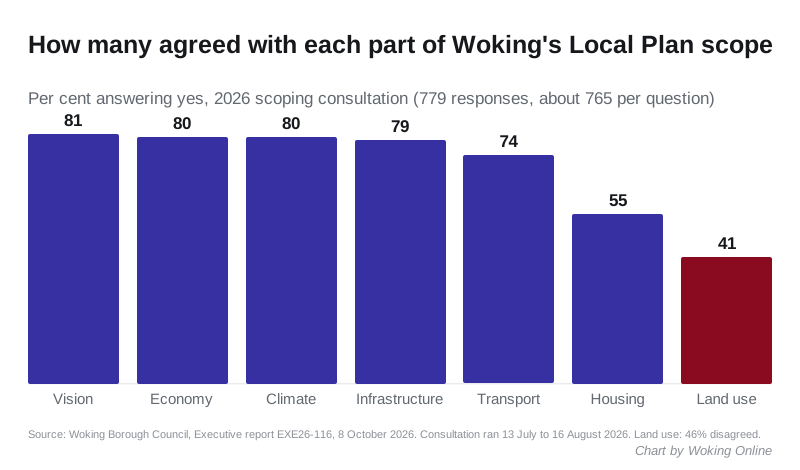
How each theme scored
| Theme | Agree | Disagree | Don’t know |
|---|---|---|---|
| A vision for Woking | 81% | 13% | 6% |
| Shaping the borough’s future economy | 80% | 13% | 7% |
| A greener, more resilient Woking | 80% | 13% | 7% |
| Infrastructure and community facilities | 79% | 13% | 8% |
| Moving around Woking and beyond | 74% | 17% | 9% |
| Meeting our future housing need | 55% | 32.5% | 12.5% |
| Efficient use of land | 41% | 46% | 13% |
The council’s announcement led on the 81% support for the vision. The full summary of comments, published alongside it, shows how conditional that support was (Regulation 22 summary report).
Green Belt was the loudest message
The summary report says Green Belt protection “was by far the most repeated issue”. Respondents wanted building directed to brownfield land first. They also pushed back hard against “grey belt” arguments, the national policy that lets weaker Green Belt land be released.
The report singles out concern about these places:
- Mayford
- Sutton Green
- Hook Heath
- Saunders Lane
- West Byfleet
Mayford came up again in the housing section, where the report says many comments about homes in poorly connected locations “specifically mentioned the Mayford area”.
Infrastructure first, and doubts about delivery
The second strong theme was that roads, schools, GP surgeries, dentists, sewers and water supply should improve before new homes arrive, not after. GP shortages and road congestion were “especially prominent”, the report says.
Many people also doubted the council could deliver. The report lists “past financial problems, unfinished schemes, debt, poor maintenance” among the reasons respondents gave. Woking’s debt and its recovery programme are covered in our report on the government repayment plan.
The housing numbers behind it
The government sets the number of homes Woking must plan for. It is currently 791 a year, which the report says comes to “around 13,000 new homes” over 16 years. Some can go on sites already allocated in the current plan, but more land will be needed.
Some respondents said that figure was too high and the council should challenge it. The Home Builders Federation took the opposite view. It said physical constraints might mean the figure cannot be met in full, but the council should still “significantly boost supply”.
Other housing comments, in the order the report gives them:
- Traveller sites were the second biggest housing topic. The report records requests for a needs assessment and a fairer spread of sites, and also “some openly hostile comments”.
- Many backed affordable and social housing, homes for young people and key workers, and finishing the Sheerwater regeneration.
- Most comments on density opposed more high-rise flats, though “a large minority” supported higher density in well-connected places.
Only 59% trust the consultation process
The council also asked whether its planned ways of consulting people would let them take part. Only 59% said yes, 33% said no and 8% did not know. Some said a consultation over the summer holidays was badly timed.
Of all responses, 98.2% came through the online portal, 1.7% by email and one on paper.
Cllr Louise Morales, the portfolio holder for planning policy, said residents “want confidence that future development will be realistic, deliverable and supported by the right investment in infrastructure and community facilities”.
What happens next
The council’s published timetable sets out the next steps (Local Plan timetable):
- 8 October 2026: the Executive notes the consultation summary
- 30 October 2026: the summary is formally published with the council’s responses to the comments
- December 2026: councillors see the content of the next consultation
- 6 January to 19 February 2027: consultation on the proposed content of the plan
- 26 January 2027: proposed policies map published
- 14 January to 13 March 2028: formal consultation on the draft plan
- April 2029: adoption
The council’s report also notes that West Surrey Council replaces Woking Borough Council in April 2027. Government expects local plans to keep moving regardless, and delays could prompt intervention.
What it means for you
Nothing is decided yet. No sites have been chosen, and the January consultation is the first chance to comment on the plan’s actual content. If you want to be told when it opens, the council runs a Local Plan mailing list: email planning.policy@woking.gov.uk.
The new plan will shape which planning applications are approved across the borough until the 2040s. Our planning news page has the background on the 12,656-home requirement in the council’s plan data and the full timetable.
Have your say