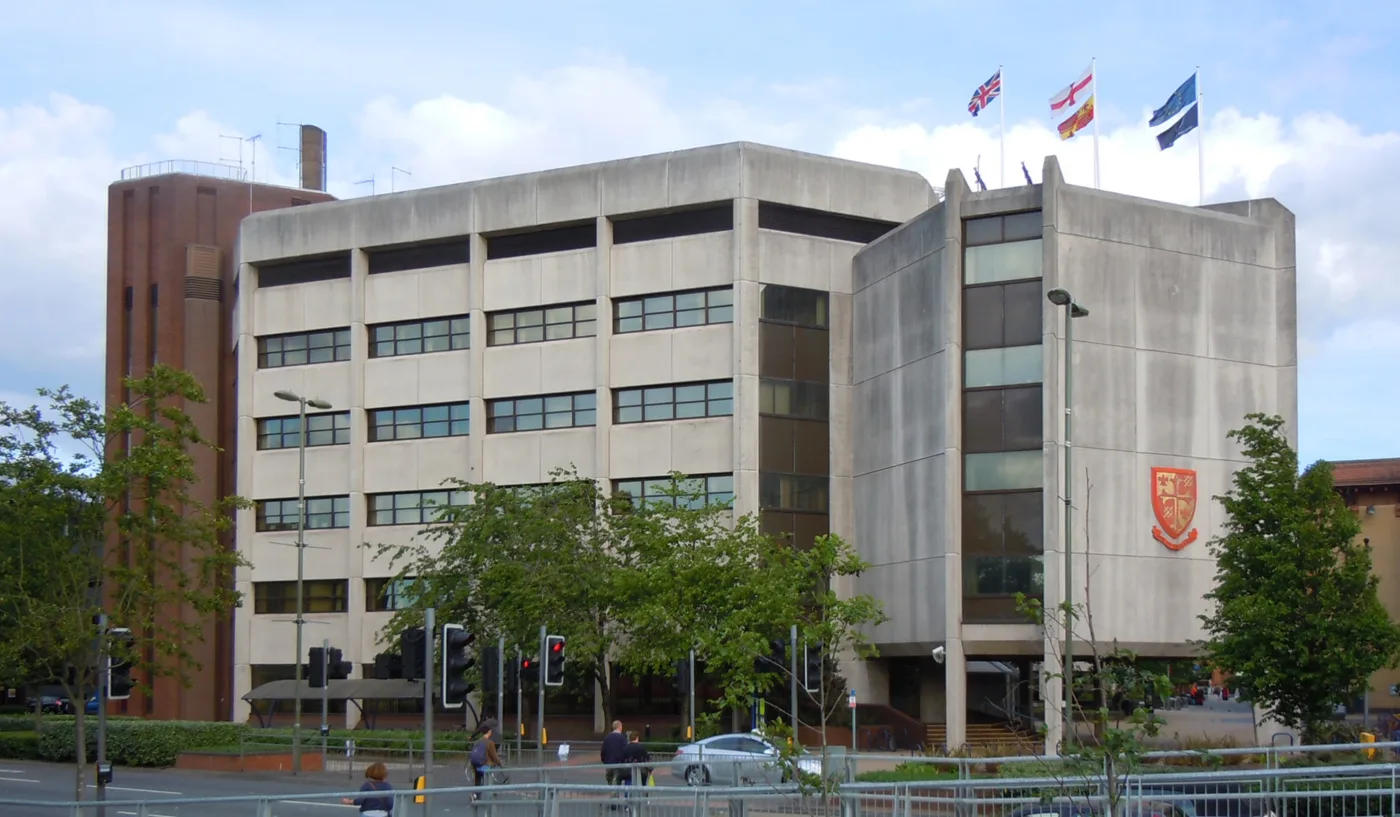

Woking council tax bands for 2026/27: the charge for every band A to H, how the bill splits three ways, the borough's debt position and how to pay less.
Woking council tax bands work the same way as everywhere else in England, but the bill behind them has an unusual story. For 2026/27 a Band D home in the borough pays £2,598.04, of which the borough council itself keeps just under twelve pence in the pound. This guide gives the charge for every band from A to H, shows exactly how the money splits between Woking Borough Council, Surrey County Council and Surrey Police, explains the borough’s debt position and what it has meant for bills, and sets out how to check your band, challenge it, and claim the discounts people most often miss. Every figure comes from the council’s own council tax setting papers.
The charge for every band in 2026/27
Unlike most districts, Woking has no parish or town councils, so there are no parish precepts and there is a single figure for the whole borough. In the council’s own resolution the aggregate of “special items” is £0, which is the technical way of saying exactly that.
| Band | 1991 property value | Annual charge 2026/27 |
|---|---|---|
| A | Up to £40,000 | £1,732.03 |
| B | £40,001 to £52,000 | £2,020.70 |
| C | £52,001 to £68,000 | £2,309.37 |
| D | £68,001 to £88,000 | £2,598.04 |
| E | £88,001 to £120,000 | £3,175.38 |
| F | £120,001 to £160,000 | £3,752.73 |
| G | £160,001 to £320,000 | £4,330.07 |
| H | More than £320,000 | £5,196.08 |
Charges from Woking Borough Council, General Fund Budget and Council Tax Setting 2026-27, Appendix 4. Band values from the Valuation Office Agency guidance on GOV.UK.
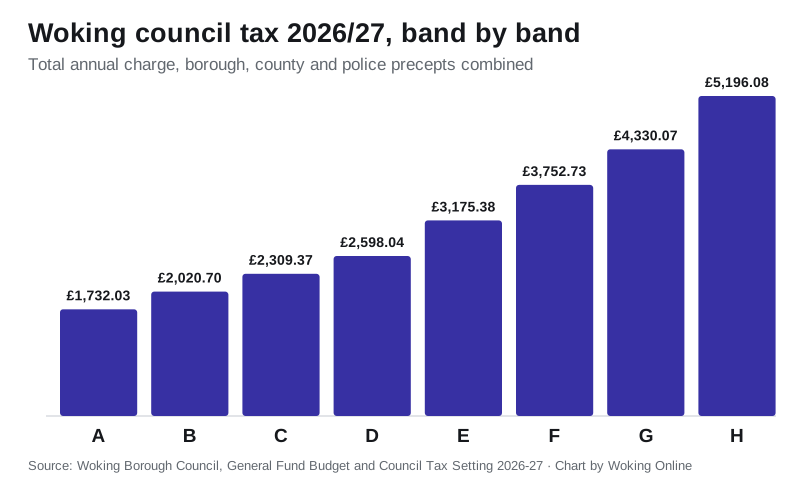
Your band is not based on what your home is worth now. It is based on what it would have sold for on the open market on 1 April 1991, a date that has never moved since council tax began in 1993. Band D is the reference band, and every other band is a fixed proportion of it set in law: Band A is two thirds of Band D, Band H is double.
Where your money actually goes
One bill, collected by Woking Borough Council, funds three separate organisations, each of which sets its own charge.
| Goes to | 2025/26 | 2026/27 | Increase | Share |
|---|---|---|---|---|
| Surrey County Council | £1,846.35 | £1,938.42 | +£92.07 (5.0%) | 74.61% |
| Surrey Police and Crime Commissioner | £337.57 | £352.57 | +£15.00 (4.4%) | 13.57% |
| Woking Borough Council | £298.11 | £307.05 | +£8.94 (3.0%) | 11.82% |
| Total Band D | £2,482.03 | £2,598.04 | +£116.01 (4.7%) | 100% |
Source: Appendix 4, Council Tax Setting 2026/27.
Nearly three quarters goes to Surrey County Council for adult social care, children’s services, schools support, libraries and most main roads. Its 4.99 per cent rise is made up of 2.99 per cent general council tax plus a 2 per cent adult social care precept. The Surrey Police and Crime Commissioner took the next slice, up 4.44 per cent, or the maximum £15 at Band D.
Woking Borough Council keeps about £307 of a £2,598 Band D bill, and that is the part that pays for bin collections, parks, leisure, planning and the rest of the services people think of as local. Its own increase for 2026/27 was 3.00 per cent, which is the standard referendum limit for lower tier councils this year.
The borough’s finances, in plain terms
Woking’s council tax has attracted national attention, so it is worth setting out what happened without spin. The dates and figures below are all from the council’s own budget report.
In May 2023 the government department now called MHCLG published an external assurance review of Woking Borough Council’s finances, investments and governance. The Secretary of State concluded the council was failing its best value duty, and the review highlighted a legacy of debt of over £2 billion. Government intervention has remained in place since. In June 2023 the council’s then section 151 officer issued a section 114 notice, because spending was likely to exceed available resources and the budget could not be balanced. The council attributes this to its historic investment strategy, which it describes as producing unaffordable borrowing, inadequate steps to repay it and high values of irrecoverable loans.
Two things have happened since that bear directly on your bill. First, in October 2025 the government confirmed an initial £500 million of debt support, expected to bring the debt down to about £1.7 billion. Second, the council has needed Exceptional Financial Support from government each year to set a legal budget at all, totalling £150.2 million for 2026/27. All of this is set out in the General Fund Budget and Council Tax Setting 2026-27 report.
On council tax specifically, the council notes that the referendum limit for most lower tier authorities in 2026/27 is 3 per cent, that increases above the cap have sometimes been agreed to help close budget gaps, and that this was the case in Woking in 2024/25 when council tax increased by 10 per cent. For 2026/27 the council chose to stay within the standard 3 per cent limit. Since 2024/25 it has also run a £100,000 annual hardship budget to mitigate the effect of that 10 per cent rise, retained again for 2026/27, on top of the Council Tax Support scheme.
What it means for you: the borough element of your bill rose by £8.94 this year, less than a fifth of the £116.01 total increase. The rest came from Surrey County Council and the police. The council’s debt problem shapes what services survive far more than it shapes the headline council tax figure now that the 10 per cent year has passed.
This is the last year Woking sets your bill
Woking Borough Council is being abolished. Under the Surrey (Structural Changes) Order 2026, the county’s councils are being replaced by two unitary authorities, East Surrey and West Surrey, with vesting day on 1 April 2027. Woking sits in West Surrey, and the borough’s leader, Cllr Ann-Marie Barker, chairs the West Surrey Joint Committee overseeing the transition. Shadow authorities were established after the May 2026 elections, with meetings from 20 May 2026 (Woking Borough Council on the transition).
Because 2026/27 ends on 31 March 2027, the charges on this page are the last set by Woking Borough Council. From April 2027 a single West Surrey Council will levy both the borough element and the far larger county element that you currently pay separately. The council’s own reporting flags that the new authorities will inherit financial pressures, and specifically that parts of West Surrey face challenges linked to historic debt, with government committed to continuing discussions about Woking’s legacy debt. What none of the published material yet sets out is how council tax levels across the four current West Surrey areas will be harmonised, so treat any claim about your 2027/28 bill with caution.
How to check or challenge your band
Banding is handled by the Valuation Office Agency, not by the council. A billing question goes to Woking Borough Council; a band question goes to the VOA.
To check your band, search your postcode on the GOV.UK council tax band tool. It shows your band and your neighbours’ bands, which matters, because similar homes in your street sitting in a lower band is the strongest evidence you have a case.
To challenge your band, use the VOA challenge service. You never need to pay a company to do this. Be aware a review can go three ways: the VOA can lower your band, leave it alone, or raise it. Gather the bands and 1991 era evidence for comparable nearby homes before you start.
Discounts and support
The reductions below are national entitlements that Woking administers, and plenty of households never claim them.
- Single person discount of 25 per cent. If you are the only adult living in the property as your main home.
- Disregarded people. Full time students, some apprentices, certain carers and people who are severely mentally impaired are not counted when working out how many adults live in a home. If everyone is disregarded the reduction can be larger than 25 per cent.
- Disabled band reduction. Where a disabled person lives in a home with an extra feature for their needs, such as a downstairs bathroom or wheelchair space, the bill can be charged at the band below.
- Council Tax Support. Woking’s scheme covers up to 100 per cent of council tax for vulnerable residents and those on low incomes. For 2026/27 pension age benefits within it are uprated by 4.8 per cent in line with the triple lock and working age benefits by 3.8 per cent in line with CPI.
- Hardship help. The £100,000 hardship budget retained for 2026/27 is aimed at wider hardship than council tax alone and links residents to debt advice partners in the borough.
What it means for you: if you live alone, the single person discount is worth £649.51 a year at Band D and £433.01 at Band A. If your income is low, Council Tax Support can go further than any discount, up to the whole bill.
Frequently asked questions
How much is council tax in Woking for 2026/27?
A Band D home pays £2,598.04 for the year. The full range runs from £1,732.03 at Band A to £5,196.08 at Band H. Woking has no parish councils, so the figure is the same across the whole borough.
Where does my Woking council tax go?
At Band D, £1,938.42 goes to Surrey County Council (74.61 per cent), £352.57 to the Surrey Police and Crime Commissioner (13.57 per cent) and £307.05 to Woking Borough Council (11.82 per cent).
Why did Woking council tax go up 10 per cent?
That was 2024/25, not this year. Woking’s council tax rose by 10 per cent, above the normal referendum limit, as part of the arrangements agreed with government to help close its budget gap following the section 114 notice. For 2026/27 the borough stayed within the standard 3 per cent limit, raising its own element by £8.94 at Band D.
Did Woking Borough Council issue a section 114 notice?
Yes. The council’s then section 151 officer issued a section 114 notice in June 2023 because spending was likely to exceed available resources. Government intervention remains in place, the council has needed Exceptional Financial Support each year since, and in October 2025 the government confirmed an initial £500 million of debt support.
What happens to my council tax when Woking Borough Council is abolished?
Woking is replaced by a new West Surrey Council on 1 April 2027, so 2026/27 is the last year Woking Borough Council sets and collects the bill. Nothing published so far sets out how council tax will be harmonised across West Surrey, so no reliable figure for 2027/28 exists yet.
How do I check what council tax band my house is in?
Search your postcode on the GOV.UK council tax band tool, which is free and shows neighbouring properties too. To challenge a band, use the VOA challenge service on GOV.UK rather than paying an agent.
Sources
- Woking Borough Council, General Fund Budget and Council Tax Setting 2026-27, Appendix 4, for every band charge, the three way split and the £0 of special items
- Woking Borough Council, General Fund Budget and Council Tax Setting 2026-27, main report, for the section 114 notice, the government intervention, the £500m debt support, Exceptional Financial Support, the referendum limit, the 2024/25 10 per cent rise and the Council Tax Support and hardship schemes
- Woking Borough Council, Council meeting of 2 March 2026, where the budget and council tax were set
- Woking Borough Council, planning for the new Surrey councils, for the 1 April 2027 vesting day and the West Surrey transition
- GOV.UK, how council tax bands are assessed, check your band and challenge your band
Figures are those set by Woking Borough Council for 2026/27 and checked in August 2026. Council tax is reset each year, so confirm on the council’s own pages before relying on a figure. Our guides to Woking bin collection days and parking in Woking cover the services that council tax and council charges pay for, and Woking Online carries the day’s local news.
Have your say