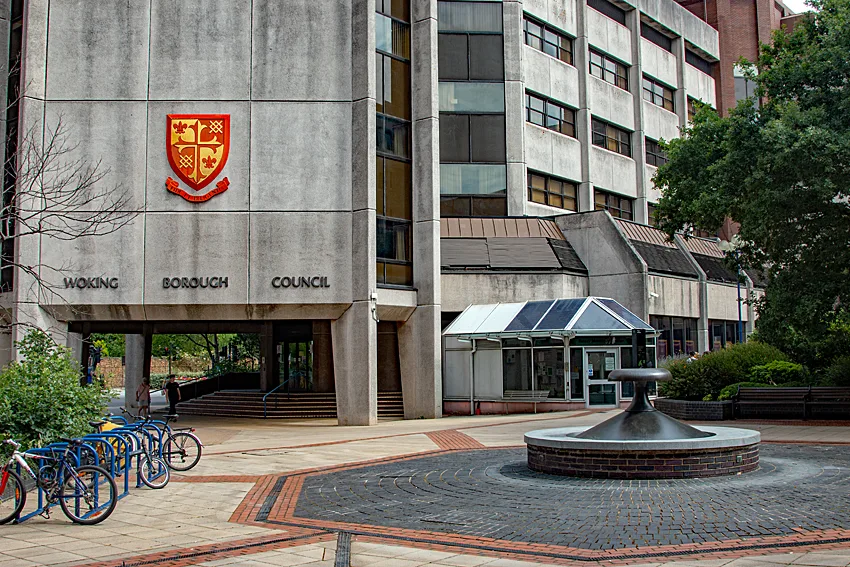

The housing regulator gave Woking Borough Council a C3 grade on 28 October, citing anti-social behaviour handling and tenancy checks across its 3,000 homes.
The housing regulator has found serious failings in how Woking Borough Council looks after its tenants. The Regulator of Social Housing published its judgement on Wednesday 28 October, giving the council a consumer grade of C3. It is the first time the council has been graded.
C3 means, in the regulator’s words, that “there are serious failings in the landlord delivering the outcomes of the consumer standards and significant improvement is needed”. The council owns and manages around 3,000 homes (Regulator of Social Housing, Woking Borough Council regulatory judgement).
The two serious failings are in how the council handles anti-social behaviour and hate incidents, and in how it oversees its tenancies. The regulator also found weaker spots in repairs to empty homes, overdue safety work and complaint handling. It found the council is meeting its repair targets and has largely fixed the safety problems that led to a breach notice in 2023.
The council said it “fully accept[s] the findings” and has already added actions to its Housing Improvement Programme (Woking Borough Council, response to regulatory judgement).
What the regulator found
The inspection finished in October 2026 and covered all four of the regulator’s consumer standards. Inspectors observed the council’s Communities and Housing Scrutiny Committee, its Housing Improvement Board and its Resident and Landlord Partnership Panel. They met tenants, officers, councillors and the council’s lead commissioner.
| Standard | What the regulator found |
|---|---|
| Neighbourhood and Community | Serious failings in managing, reporting and monitoring anti-social behaviour and hate incidents |
| Tenancy | Serious failings: limited oversight of tenancies, so the council could not show decisions follow its own policies |
| Safety and Quality | Weaknesses: about 12% of homes below the Decent Homes Standard; some overdue fire, water and asbestos actions; slow repairs to empty homes |
| Transparency, Influence and Accountability | Weaknesses: gaps in tenant information, out-of-date sign-up packs, slow Stage 1 complaint replies |
Anti-social behaviour and hate incidents
This is the sharpest part of the report. The regulator saw evidence of partnership working, with the police and others. But it found the council:
- does not effectively triage or risk-assess reports of anti-social behaviour or hate incidents
- does not make sure agreed communication plans with the people reporting them are kept up
- does not make sure victims are properly supported
The council has added the problem to its Housing Improvement Plan, the regulator said.
Tenancies
The council has “limited routine oversight, monitoring or reporting arrangements” for its tenancies, the regulator found. As a result it could not give assurance that tenancy decisions follow its own Tenancy Policy, its Housing Allocation Policy or the regulator’s standard.
Tenants on introductory and fixed-term tenancies get limited information about when their tenancy expires. Reporting on the support offered to tenants during a tenancy is also limited.
Repairs and safety
The picture on repairs is better. The council is meeting its targets for routine, urgent and emergency repairs, and the regulator found “very few” overdue repairs, disrepair or damp and mould cases.
It did find:
- around 12% of homes did not meet the Decent Homes Standard at the time of the inspection
- some overdue fire, water and asbestos remedial actions, which the council has “clear plans” to complete
- delays in repairing empty homes before they are relet
- limited reporting on hazards and communal repairs
- a need to improve how tenants are told to report disrepair
Complaints and information
The regulator found staff treat tenants “with fairness and respect” and described a positive staff culture. It found weaknesses in replying to Stage 1 complaints on time and in making sure actions from complaints were completed. Recent changes have improved performance, it said, and it will keep watching.
How this follows the 2023 breach
In December 2023 the regulator found the council had breached its consumer standards after the council referred itself. At the time it found more than 400 overdue safety actions from fire risk assessments, and the council could not confirm whether smoke detectors were fitted in more than a quarter of its tenants’ homes (Regulator of Social Housing, December 2023).
This week’s judgement says the council is now “largely meeting its obligations relating to health and safety compliance, having improved its position” since that notice.
What the council says
The council’s statement says it has, since the inspection:
- drafted a new Tenancy Management Policy
- rolled out anti-social behaviour case management training for staff
- completed a review of new lettings
- published its annual report, sharing performance data with tenants
Cllr Ian Johnson, the council’s portfolio holder for housing, said the C3 grading “is a reminder that we still have further to go on our improvement journey. We are however, making progress.” He thanked “tenants, leaseholders, shared owners and resident volunteers for their continued support, patience and involvement”.
The same day elsewhere
Woking was one of three councils graded on 28 October for serious or very serious failings. Haringey in north London was given C4, the lowest grade, and Tamworth in Staffordshire was given C3 (Regulator of Social Housing, 28 October 2026).
The regulator only publishes a narrative judgement on a landlord where it considers there to be serious weaknesses or failings. It grades every landlord with more than 1,000 homes.
What it means for you
- If you are a council tenant and have reported anti-social behaviour or a hate incident, the regulator’s findings are about exactly that process. You are entitled to know who is handling your case and what happens next. Ask the council’s housing team for a named contact and a written plan.
- If you are on an introductory or fixed-term tenancy, check your tenancy agreement for its end date and ask the council in writing what happens when it expires.
- If your complaint is not resolved, the council’s complaints process comes first. After that, individual complaints go to the Housing Ombudsman, not the regulator.
- Watch for progress reports. The regulator says it will keep working with the council to check the problems are fixed, and the council’s Communities and Housing Scrutiny Committee is where housing performance is reported in public.
Woking Borough Council is due to be replaced by the new West Surrey Council from 1 April 2027, the council says. Our report on the West Surrey survey has how to give your views on its priorities.
Sources
- Regulator of Social Housing: Woking Borough Council (43UM) regulatory judgement, 28 October 2026
- Regulator of Social Housing: RSH warns council to make fundamental changes for tenants, 28 October 2026 (full list of the day’s judgements)
- Woking Borough Council: response to regulatory judgement, 28 October 2026
- Regulator of Social Housing: Wigan and Woking Borough Councils breach RSH’s consumer standards, 14 December 2023
Have your say