
1,795 people in Woking borough claimed unemployment benefits in June, level with a year earlier; the 2.7% rate undercuts the South East (3.1%) and UK (3.9%).
1,795 people in Woking borough were claiming unemployment-related benefits in June, according to the Office for National Statistics claimant count, exactly the same number as in June last year. That is 2.7 per cent of residents aged 16 to 64, comfortably below the South East average of 3.1 per cent and the UK’s 3.9 per cent. (ONS claimant count, published via Nomis)
The claimant count records people claiming Jobseeker’s Allowance plus those on Universal Credit who are required to look for work. It is not the full unemployment measure, but it is the only jobs figure published every month at borough level, which makes it the best regular signal of how the local labour market is moving.
Flat over the year, with a spring bump in the middle
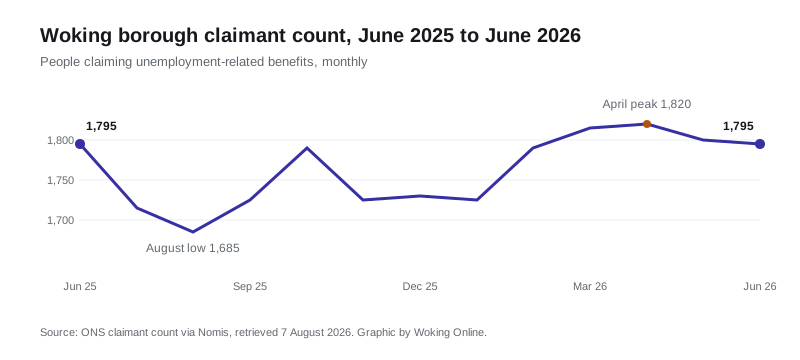
The monthly figures from June 2025 to June 2026 run 1,795; 1,715; 1,685; 1,725; 1,790; 1,725; 1,730; 1,725; 1,790; 1,815; 1,820; 1,800; and 1,795. The year’s low was 1,685 in August 2025 and the high 1,820 in April 2026, so the whole year played out inside a band of 135 people, with a slow climb through late winter and spring that has now eased back. (Nomis, claimant count for Woking, retrieved 7 August 2026)
One mover inside the flat total is worth watching: 325 of June’s claimants were aged 18 to 24, up from 255 a year earlier. That is a rise of 70 young claimants, roughly 27 per cent, at a time when the overall count did not move at all, which mirrors the national pattern of a tougher entry-level jobs market.
Woking’s 2.7 per cent rate means roughly one working-age resident in 37 is claiming, against about one in 32 across the South East and one in 26 nationally on the same measure.
What it means for you
For local jobseekers, a claimant rate below the regional and national averages means comparatively less competition from other claimants, though the rise among under-25s suggests first jobs are harder to land here than a year ago. If you have lost work or your hours have been cut, the main route into support is Universal Credit, claimed online. Low-income households can also apply for Council Tax Reduction, which cuts the bill rather than paying cash; our guide to council tax bands in Woking explains how the underlying bill is set.
The July figures are due from the ONS in mid-August; we will report them when they are published.
Have your say