
Woking's proposed Street Trading Policy sets fees at £1,240 for a new year-long consent, £135 for a day and £50 for charity events. Comments close 15 November.
A coffee round or an ice cream van that stops to trade on a Woking street would pay £1,240 for a new year-long consent under a draft policy the borough council put out for consultation on Monday. A single day costs £135. A charity or community event would pay £50.
The eight-week consultation on the draft Street Trading Policy closes at 11.59pm on Sunday 15 November 2026 (Woking Borough Council).
What is actually being proposed
The council is not adding new roads to the list of streets where trading is controlled. Its release says so directly: the policy “does not introduce street trading controls to any new roads or locations”. What it does is write down how the council will use powers it already holds under Schedule 4 of the Local Government (Miscellaneous Provisions) Act 1982.
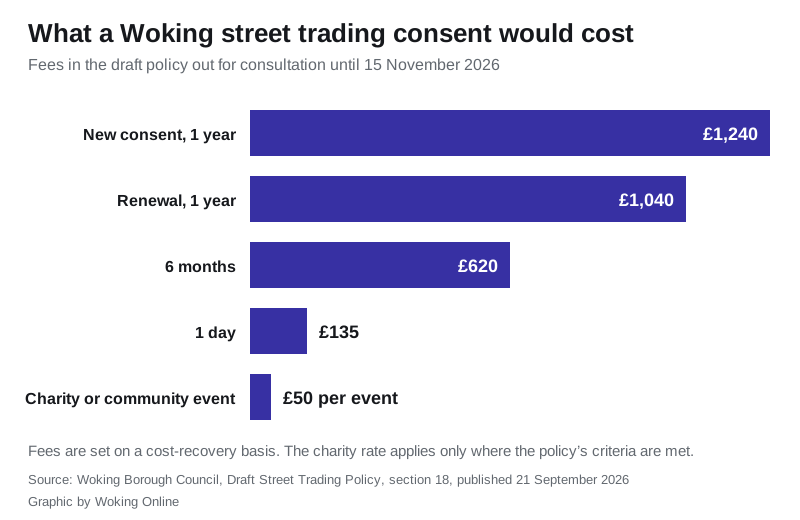
The fees in section 18 of the draft are:
- £1,240 for a new one-year consent
- £1,040 to renew a one-year consent
- £620 for six months
- £135 for a single day
- £50 per event for a qualifying charity or community event
The council says the fees are set on a cost-recovery basis, and that annual reviews may adjust them for inflation and enforcement costs. Consents are personal and cannot be sold, sub-let or transferred. If someone takes over a pitch, the old consent has to be surrendered and the new trader has to apply from scratch.
The list of streets was drawn up in 1993
The draft says the borough’s consent streets are those “adopted on 6 December 1993”. That schedule is reproduced at the back of the document, and it is long: six pages of names in three columns, running alphabetically from Abbey Close to Woodend Close.
It is mostly ordinary residential roads. Balmoral Drive, Barrack Path, Stockers Lane, Wych Hill, Ivydene and Hollies Avenue are all on it, alongside Guildford Rd, The Triangle, Victoria Rd and the three separate entries for High St in Horsell, Knaphill and Old Woking. Some entries are stretches rather than whole roads: Goldsworth Rd appears only from the Church Street West junction to the St Johns Road junction. In practice a mobile trader who stops to sell on most streets in the borough needs the council’s consent first.
One thing worth flagging for anyone trying to check whether their own road is listed: those six pages are published as scanned images inside the PDF, not as text. They cannot be searched, copied or read by a screen reader.
Parks are handled separately. The draft says parks in Woking are not designated as consent streets or prohibited streets at all, and that anyone wanting to trade in one has to apply to Woking Environmental Services instead. Jubilee Square is restricted to events run by the council or partners it authorises, and commercial activity in the town centre’s public realm areas is booked and charged for by Woking Shopping.
What a trader would have to produce
The application requirements are the part of the draft that would change day-to-day life for anyone selling on the street. Every application must include:
- public liability insurance of at least £5 million
- for food businesses, registration with the local authority, Level 2 Food Safety training and a food hygiene rating of 3 to 5
- allergen labelling compliance, including the pre-packed-for-direct-sale rules known as Natasha’s Law
- evidence of waste duty of care, such as a contract and waste transfer documentation
- current gas certificates where LPG is used, and compliance with Health and Safety Executive guidance for mobile catering
- a basic DBS check for the consent holder and anyone regularly trading, with enhanced checks only where the role qualifies
- confirmation that staff have the right to work in the UK
Applicants must be 17 or over. Each new application is consulted on for 28 days with Surrey Highways, Surrey Police, Surrey Fire and Rescue, ward councillors, the council’s planning and environmental health teams, and local residents and businesses. The council says it aims to decide within 28 days of the consultation closing.
The charity rate, and who qualifies for it
The £50 rate is the one genuinely new concession in the draft, and it is tightly drawn. To qualify, an event has to be organised by a local authority, town or parish council, or a recognised community group, voluntary organisation or registered charity. Its main purpose has to be community engagement, cultural celebration, civic participation or fundraising. Any trading has to be incidental to the event rather than its main feature.
The draft adds a location test as well: the event should be at or near premises or land associated with the organising body, giving the example of a church-organised event held at or near the church. The council may ask for charity registration details, event budgets or confirmation of how trading income will be used. Events run primarily as a commercial venture pay the standard rate.
Enforcement, and the missing right of appeal
Trading without consent in a consent street, or trading at all in a prohibited street, is a criminal offence under Schedule 4. The draft puts the maximum fine at level 3 on the standard scale, currently £1,000, and sets out a graduated response: verbal warning, written warning, suspension, revocation or refusal to renew, then prosecution.
There is one point applicants should know before they pay. There is no statutory right of appeal against the refusal of a street trading application. The draft offers an internal review instead: a written request to the Head of Environmental Health within 14 days, setting out why consent should be granted.
What it means for you
If you run a coffee cart, a burger van, an ice cream round or a stall at a village fete, this is the document that will decide what you pay and what paperwork you need. The fees are the headline, but the DBS requirement, the minimum hygiene rating of 3 and the £5 million insurance floor are the conditions most likely to catch out a small operator who has been trading informally.
If you are a resident, the practical effect is the 28-day consultation on each application. Ward councillors, local residents and local businesses are all named as consultees, so an objection to a van parking outside your house has a formal route.
If you organise a community event, the £50 rate is worth reading section 10 of the draft closely for. Charge traders a pitch fee for profit, or let trading become the main feature, and the event falls back to the standard charges. Events of the kind the rate is aimed at turn up regularly on our things to do in Woking page, and the town centre’s biggest one this month was the car show on 20 September.
Responses go through the council’s Woking Says platform. After the consultation closes, officers will report to the Licensing Committee, which decides whether to adopt the policy and whether to change it first.
The council is also running a separate, much shorter survey on how the future East Surrey and West Surrey council websites should be organised, open until 10am on Monday 5 October, with a supported drop-in at Woking Library on Tuesday 29 September, 10am to 4pm, no booking needed (Woking Borough Council).
Frequently asked questions
How much does a street trading consent cost in Woking?
Under the draft policy, £1,240 for a new one-year consent, £1,040 to renew one, £620 for six months and £135 for a single day. A qualifying charity or community event pays £50 per event.
Do I need consent to sell from a van on my street?
If the street is on the council’s consent street list, yes. That list was adopted on 6 December 1993 and covers most roads in the borough, including ordinary residential streets. Mobile and peripatetic traders such as ice cream vans and coffee rounds are covered whenever they stop to trade.
What do I need to apply?
Public liability insurance of at least £5 million, a basic DBS check, proof that staff have the right to work in the UK, and waste duty of care evidence. Food businesses also need local authority registration, Level 2 Food Safety training and a food hygiene rating of 3 to 5.
Can I appeal if my application is refused?
There is no statutory right of appeal. The draft offers an internal review instead: a written request to the Head of Environmental Health within 14 days, explaining why consent should be granted.
When does the consultation close?
11.59pm on Sunday 15 November 2026. Responses go through the council’s Woking Says platform, and officers will then report to the Licensing Committee.
Sources
- Woking Borough Council: Street Trading Policy consultation launched, 21 September 2026 (launch, eight-week period, closing date, Licensing Committee route, quotes from Cllr Ann-Marie Barker)
- Woking Borough Council: Street Trading Policy consultation page (closing time of 11.59pm on 15 November, how to respond)
- Woking Borough Council: Draft Street Trading Policy (PDF), published September 2026 (fees in section 18, charity criteria in section 10, application requirements in section 11, consultation and determination in sections 12 and 13, enforcement and offences in sections 20 and 21, appeals in section 23, the 6 December 1993 consent street list in Appendix A)
- Woking Borough Council: Help shape your future council websites, 21 September 2026 (website survey dates and the Woking Library drop-in)
Figures and dates checked against the council’s own published documents on 23 September 2026.
Have your say